Digital Literacy in Nepal 2026: Essential Skills for the Future
In 2026, digital literacy has evolved from being a "nice-to-have" skill to a fundamental requirement for survival and success in Nepal. As the nation embraces the 'Digital Nepal' framework, almost every interaction—from government services to grocery shopping—has moved online. However, digital literacy is not just about knowing how to scroll through social media. It's about critical thinking, security, and the efficient use of digital tools. This 1500+ word guide is designed to empower every Nepali citizen with the digital skills needed to thrive in a technology-driven world.
"The illiterate of the 21st century will not be those who cannot read and write, but those who cannot learn, unlearn, and relearn digital skills."
1. What Digital Literacy Means in the 2026 Nepali Context
Digital literacy in 2026 is a multi-dimensional concept. It includes Information Literacy (finding and evaluating data), Media Literacy (understanding digital content), and Technical Literacy (using hardware and software). For a Nepali professional, it means being able to switch seamlessly between a smartphone app and a complex desktop software, all while keeping data secure. It also means understanding 'Digital Etiquette'—how to communicate professionally in the virtual world.
2. Mastering Productivity Tools: The Preeti-Unicode Era
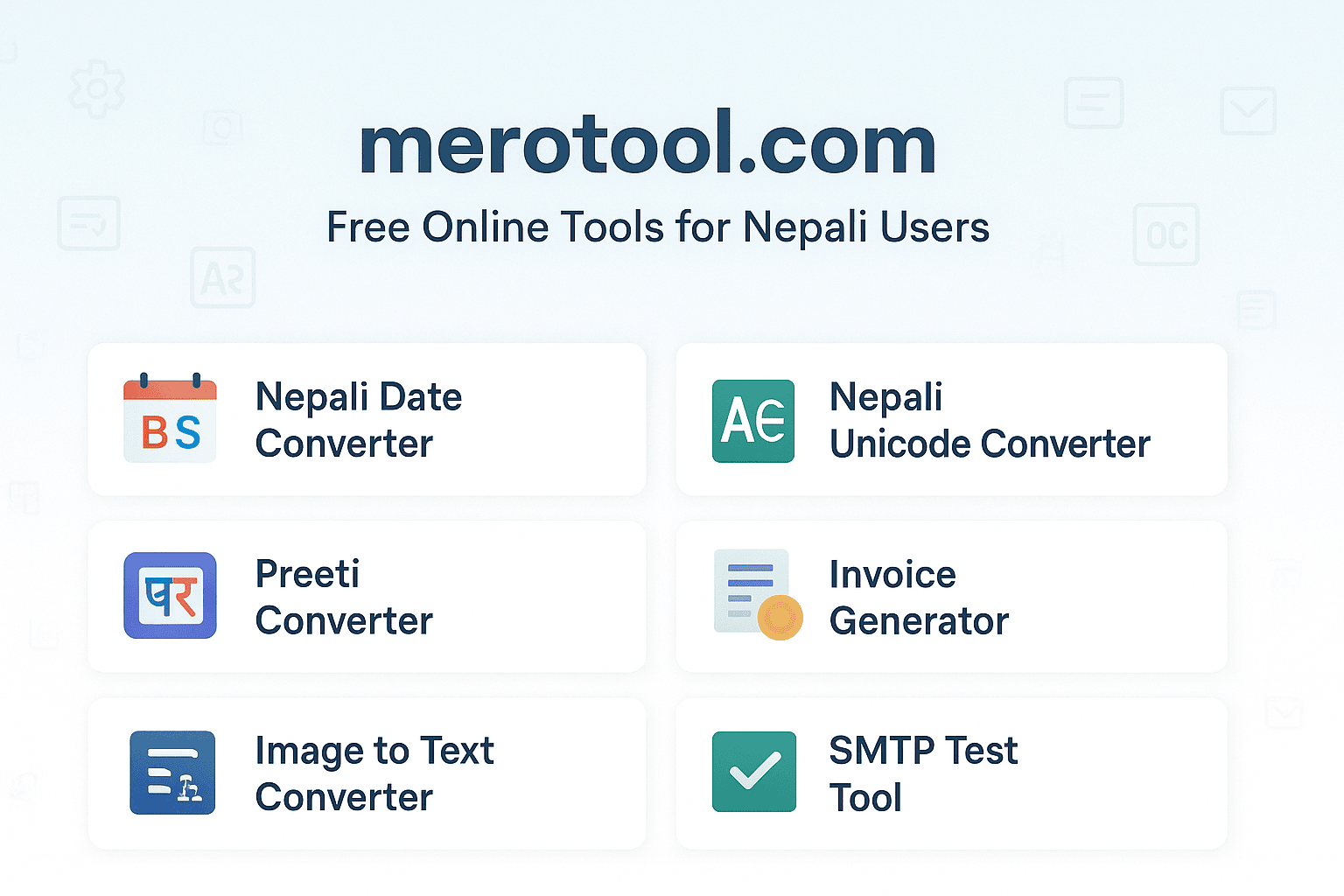
Nepal has a unique linguistic challenge in the digital space. For decades, Preeti font was the standard for Nepali typing, but it's not web-friendly. In 2026, mastery of Unicode is essential for anyone working in administration, journalism, or content creation. Understanding how to use our Unicode to Preeti and Preeti to Unicode converters is a core skill for preserving the legacy of old documents while staying modern. Additionally, fluency in Google Workspace (Docs, Sheets, Slides) and Microsoft 365 is non-negotiable for the modern office.
3. The Nagarik App and E-Governance Mastery
The 'Nagarik App' has become the central hub for Nepali citizens. Digital literacy in 2026 means knowing how to link your citizenship, PAN, license, and educational certificates to the app. It also means being able to file taxes online through the IRD portal and apply for passports or driving licenses without the help of middle-men. These 'E-Governance' skills save time and reduce the potential for corruption. If you are struggling with online forms, our Roman to Unicode tool can help you fill in details in Nepali accurately.
4. AI Literacy: Prompt Engineering for Everyone
AI is no longer a futuristic concept; it's here. In 2026, knowing how to interact with AI tools like ChatGPT or Gemini is a competitive advantage. 'Prompt Engineering'—the art of giving clear instructions to AI—is a skill every student and professional should learn. Whether it's for generating business ideas or summarizing long reports, AI can boost your productivity by 10x. However, literacy also means being aware of AI 'hallucinations' and biases. Never take an AI-generated result as the absolute truth without verification.
5. Deep Dive into Cyber Security and Personal Privacy
As your digital footprint grows, so does your vulnerability. Cyber security is the most critical pillar of digital literacy. In 2026, you must know how to:
- Detect Social Engineering: Scammers often use psychology to trick you into giving up passwords. Be skeptical of 'urgent' messages or 'too-good-to-be-true' offers.
- Use Password Managers: Stop using your birthdate or '123456' as a password. Use a password manager and our Password Generator to create un-hackable credentials.
- Manage App Permissions: Why does a calculator app need access to your contacts and location? Learn to say 'No' to invasive permissions.
- Spot Phishing: Always check the 'sender' email address and the URL of the login page before entering your credentials.
6. The Gig Economy and Remote Work Skills
The world is your office. Digital literacy allows Nepalis to compete in the global 'Gig Economy' on platforms like Upwork and Fiverr. To succeed, you need more than just a skill; you need 'Remote Literacy'—understanding time zones, asynchronous communication, and digital project management tools like Trello or Slack. Receiving payments is also a hurdle, so understanding international transfer methods and how to withdraw balances legally is vital. Check our Freelancing Guide for a deeper dive.
7. Digital Marketing Basics for Small Businesses
If you have a business in Nepal in 2026, you are a digital marketer by default. Literacy in this area means understanding SEO (Search Engine Optimization), social media algorithms, and how to use tools like Canva for design. You don't need to be an expert, but you must understand how your customers find you online. Using QR Codes for payments and information sharing is also a must-have skill for every shop owner.
8. Critical Thinking in the Age of Misinformation
Nepal's social media landscape is often flooded with fake news and manipulated images. Digital literacy is your filter. Before sharing a 'sensational' news piece, verify it with multiple trusted sources. Learn how to do a 'Reverse Image Search' to see if a photo is from a different event. Being a responsible digital citizen means not contributing to the spread of misinformation.
9. Data Literacy: Understanding the Numbers
We are surrounded by data. Whether it's tracking your fitness on a smartwatch or analyzing sales trends for your shop, being able to read and interpret data is a superpower. In 2026, even basic skills in Excel or Google Sheets—like sorting, filtering, and using simple formulas—can give you insights that others miss. Use our Tax and Health calculators to start interacting with your own data meaningfully.
10. The Role of Digital Literacy in Financial Freedom
Digital literacy and financial literacy are now intertwined. Managing your personal finance requires using banking apps, stock trading platforms (TMS), and digital wallets. If you are not digitally literate, you are excluded from the best investment opportunities, like SIPs or high-interest digital savings. The digital divide is becoming a wealth divide.
11. Case Study: The Digital Transformation of a Teacher
Shanti, a teacher in a government school in Chitwan, felt left behind when the pandemic hit. However, by 2026, she has become a digital leader in her community. She learned to use Google Classroom for assignments, Zoom for extra classes, and Mero Tool's Image to Text tool to digitize her old handwritten notes. She even started a small YouTube channel sharing teaching tips. Her journey shows that digital literacy has no age limit; it only requires a growth mindset.
12. The Future: Towards a 100% Digitally Literate Nepal
The vision for 2030 is a Nepal where every citizen, regardless of their location or age, can navigate the digital world with confidence. This requires a collective effort from the government, NGOs, and platforms like Mero Tool. As AI and blockchain become more integrated into our lives, the 'Basics' of digital literacy will change. Stay curious, stay updated, and never stop learning. The digital world is your oyster.
- Why should I switch from Preeti to Unicode? Unicode is the international standard. Text typed in Unicode can be read on any device (phone, tablet, PC) without installing special fonts, and it is searchable by Google.
- Is the Nagarik App safe to use? Yes, it is a government-verified app with multiple layers of security. It uses your citizenship and mobile number for verification. Always keep the app updated and use a strong password.
- How do I learn 'Prompt Engineering'? Start by giving clear, detailed instructions to AI tools like ChatGPT. Instead of "Write an email," say "Write a professional email to my boss requesting a 2-day leave for a family function, using a polite tone."
- What is the best way to stay safe from phishing? Never click on suspicious links, never share your OTP/PIN, and always verify the sender's identity through official channels if you receive an unexpected request.
- Where can I learn digital marketing for free? Many platforms like Google Digital Garage and HubSpot Academy offer free certification courses in digital marketing that are recognized globally.
Conclusion: Empower Yourself for the Digital Age
Digital literacy is the most important investment you can make in yourself in 2026. It opens doors to global careers, secures your hard-earned money, and connects you to essential services. At Mero Tool, we are committed to being your partner in this journey, providing the utilities—from Unicode Typers to Technical Testers—that bridge the gap between complexity and ease. Don't be a passive observer of the digital revolution; be an active participant. Your future is digital, and it starts with a single click. Happy learning!


Comments (1)
The part about Nagarik App and e-governance is so true. It has made life much easier for us in remote areas!
ReplyLeave a Comment